
FoLix™
Fractional Laser Hair Regeneration
Stimulate, Strengthen, & Restore Growth
Hair loss is rarely just cosmetic.
It affects confidence, identity, and the way we see ourselves.
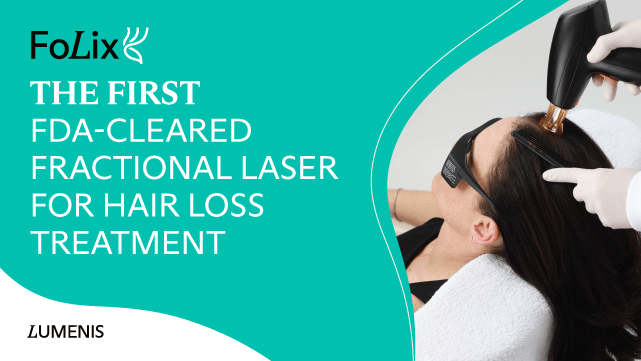
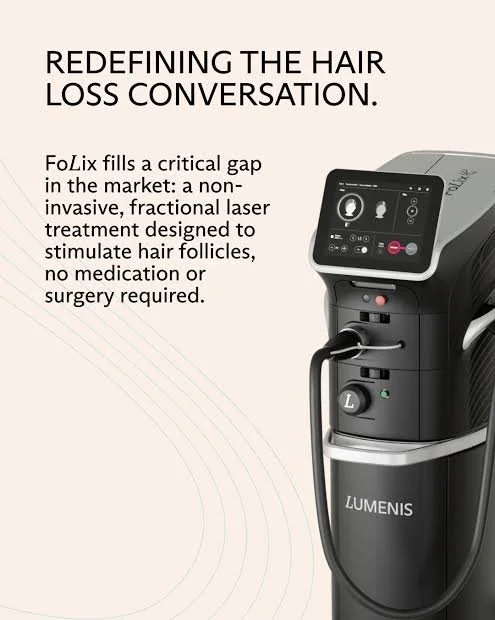
FoLix™ Non-Ablative Fractional Laser Hair Regeneration is an advanced, non-surgical treatment designed to stimulate dormant hair follicles, improve scalp health, and support natural hair regrowth using targeted fractional laser technology.
This is regenerative hair restoration — clinically driven, minimally invasive, and designed to work with your biology.
What is FoLix™?
FoLix™ utilizes non-ablative fractional laser energy to create precise microthermal coagulative zones within the scalp without damaging the skin’s surface.
These controlled micro-injuries stimulate:
• Follicular regeneration
• Increased blood flow and nutrient delivery
• Collagen remodeling around the follicle
• Activation of dormant hair follicles
• Enhanced scalp health and cellular turnover
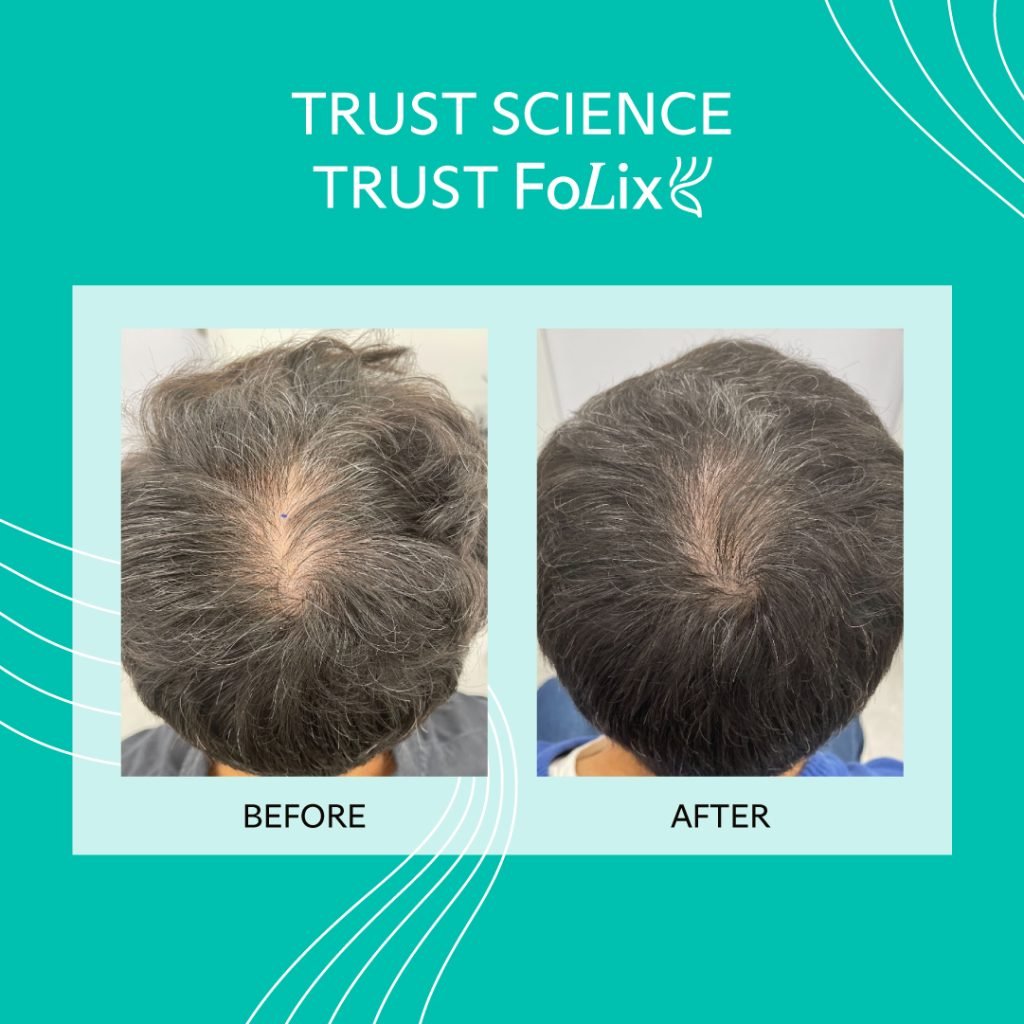
The result is healthier scalp function and progressive improvement in hair density, thickness, and overall growth quality.
How does it work?
Unlike surgical hair restoration, FoLix™ stimulates your body’s natural regenerative response.
The laser energy:
Creates microscopic thermal channels within the scalp
Increases circulation and oxygenation
Encourages growth factor release
Improves follicular environment
Supports stronger, healthier hair production
Because the treatment is non-ablative, the skin surface remains intact — allowing for minimal downtime and faster recovery.
But does it really work?

.Clinical Evidence & Scientific Support
Evidence-Based Hair Regeneration
FoLix™ non-ablative fractional laser therapy is supported by emerging clinical literature demonstrating its remarkable ability to stimulate hair growth, improve follicular activity, and enhance overall scalp hair density in patients with androgenetic alopecia and diffuse thinning. In several randomized and controlled, double-blinded, clinical trials a 96-98% success rate was demonstrated in regenerating hair.
Unlike topical therapies that rely heavily on patient compliance and daily application, fractional laser technology works by creating controlled microthermal stimulation within the scalp to activate regenerative pathways involved in follicular cycling and vascular support.
Comparative Study: Fractional Laser vs. 5% Minoxidil
A randomized, investigator-blinded controlled study published in the Journal of Cosmetic Dermatology evaluated the efficacy of a 1565nm non-ablative fractional laser compared to topical 5% minoxidil for androgenetic alopecia.
Key Findings Included:
• Significant improvement in hair density and thickness
• Increased patient satisfaction scores
• Clinical improvement in hair growth parameters
• Strong safety profile with minimal adverse effects
"As compared with 5% minoxidil, 1565 nm NAFL showed significantly greater improvements in total hair number, total hair density (hair/cm2), terminal hair number, terminal hair density (hair/cm2), number of hair follicle units, and average hair number/number of hair follicle units.”
Reference:
Kim WS, Lee HI, Lee JW, et al. Investigator-blinded, controlled, and randomized comparative study on 1565 nm non-ablative fractional laser versus 5% minoxidil for treatment of androgenetic alopecia. Journal of Cosmetic Dermatology. 2013;12(2):107-113.
Other studies confirming efficacy
A separate study published in Lasers in Surgery and Medicine evaluated scalp hair improvement following treatment with a non-ablative fractional laser.
Reported Outcomes Included:
• Visible improvement in scalp hair appearance
• Increased hair fullness and density
• Improved patient-perceived hair quality
• Excellent tolerability and minimal downtime
“The overall success rate of correct identification of before and after images among the 98a evaluable patients was 96.9% (95% confidence interval: 91.4%-98.5%) and remained consistently high (> 95%) across the evaluated subgroups (patients with AGA [androgenic alopecia], patients with unknown type of alopecia, males and females).
No adverse events were documented in the clinic records for the 132 subjects included.
Researchers concluded that non-ablative fractional laser treatment demonstrated meaningful cosmetic improvement in scalp hair appearance while maintaining a favorable safety profile.”
Reference:
Waibel JS, Wulkan AJ, Rudnick A. Improvement in scalp hair appearance following treatment with a non-ablative fractional laser: A retrospective observational study. Lasers in Surgery and Medicine. 2017;49(1):72-78.
Why This Matters
Hair restoration is evolving beyond temporary topical solutions alone.
Emerging regenerative technologies such as non-ablative fractional laser therapy offer:
✔ Follicular stimulation without surgery
✔ Improved scalp microcirculation
✔ Enhanced regenerative signaling
✔ Minimal downtime
✔ Evidence-supported outcomes
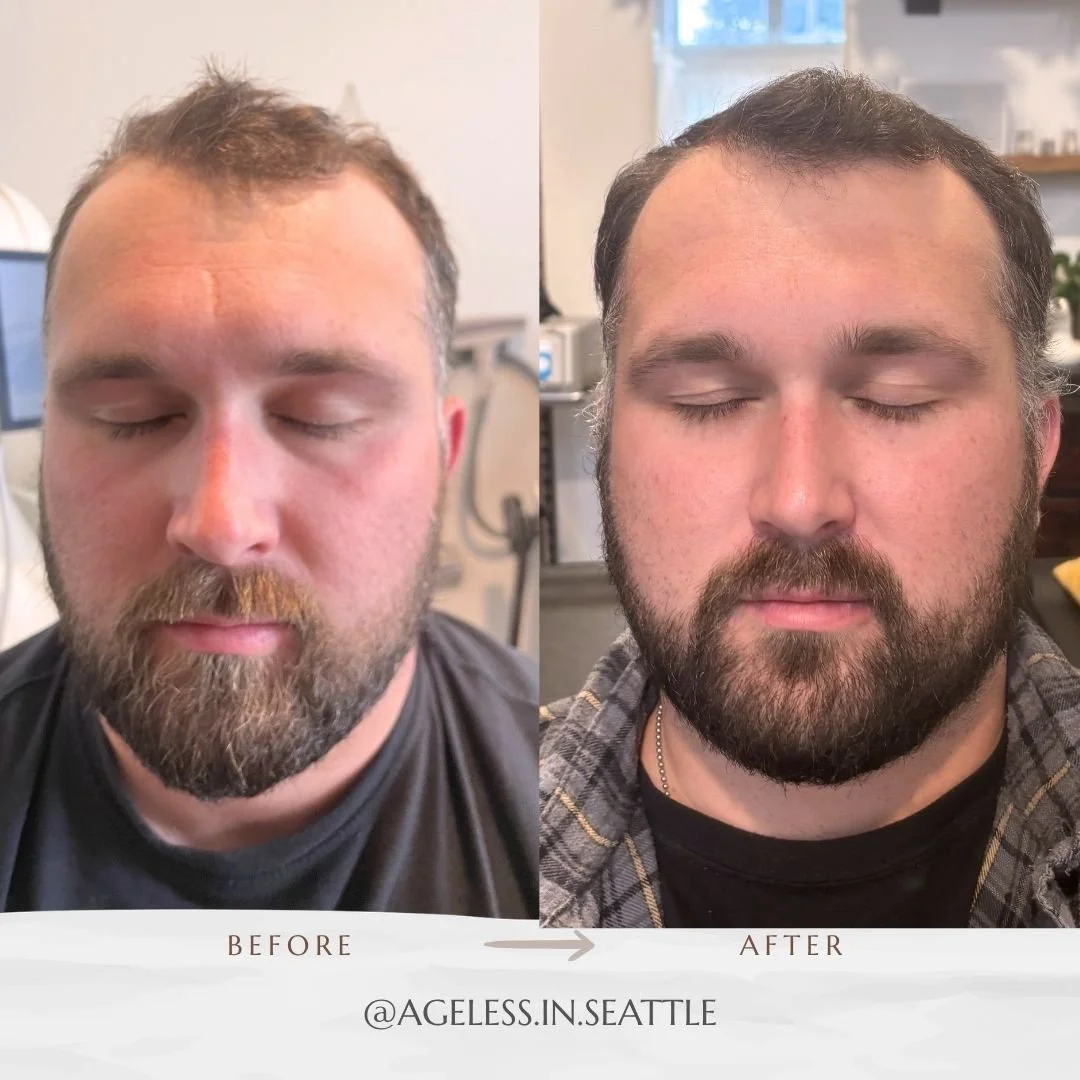
At Ageless Aesthetics, we prioritize treatments grounded in both clinical science and real-world patient outcomes — because regenerative medicine should be both sophisticated and evidence-informed.
Our Philosophy
The goal is not simply more hair.
It’s healthier follicles, improved scalp integrity, and long-term restoration supported by modern regenerative technology.

I Already have a Red Light Laser Cap.
Isn’t that enough?
FoLix™ vs. LLLT Helmets
Medical-Grade Regeneration vs. Consumer Light Therapy
Not all “laser hair restoration” technologies work the same way.
Many at-home hair growth devices use low-level light therapy (LLLT) or red-light LED technology, which delivers low-energy surface light intended to stimulate follicles superficially over time.
FoLix™ is fundamentally different.
Rather than relying on passive light exposure alone, FoLix™ uses a medical-grade non-ablative fractional laser to create controlled microthermal stimulation within the scalp — triggering a far more significant regenerative response at the follicular level.
The Difference in Technology
At-Home Red Light Devices (LLLT)
Consumer devices typically:
Use low-energy LED or low-power laser diodes
Deliver superficial light exposure
Require frequent long-term home use
Produce modest stimulation effects
Depend heavily on patient consistency and compliance
While some studies suggest mild benefit, results are often subtle, gradual, and highly variable.
FoLix™ Non-Ablative Fractional Laser
FoLix™ delivers:
Controlled fractional thermal stimulation
Deeper dermal penetration
Activation of wound-healing and regenerative pathways
Increased vascular signaling and follicular remodeling
Clinically significant scalp regeneration response
Rather than simply “stimulating” follicles, FoLix™ creates a regenerative environment that supports stronger follicular activity and improved scalp health.
Why Fractional Laser Technology Matters
The microthermal zones created by FoLix™:
Increase blood flow and oxygenation
Stimulate growth factor signaling
Improve nutrient delivery
Remodel perifollicular tissue
Activate dormant follicles more aggressively than surface-level LED exposure
This mechanism is far more biologically active than passive red-light exposure alone.
Clinical Strength vs Consumer Devices
Another major distinction is treatment intensity.
FoLix™ is:
✔ Medical-grade technology
✔ Performed under professional supervision
✔ Customized to scalp condition and hair loss pattern
✔ Based on parameters used in published clinical literature
Most online LED helmets:
• Cannot create fractional regenerative injury
• Operate at significantly lower energy outputs
• Are limited by safety constraints for home use
• Lack individualized medical oversight
This is the difference between:
surface-level stimulation
vs.targeted subdermal regeneration
Why We Prefer FoLix™ at Ageless
We believe meaningful hair restoration requires more than passive maintenance.
FoLix™ offers:
✔ Stronger regenerative signaling
✔ Evidence-supported follicular stimulation
✔ Improved scalp quality
✔ Greater treatment precision
✔ Synergistic combination potential with PRP and regenerative therapies
For patients seeking proactive, medically driven hair restoration, FoLix™ represents a far more advanced and biologically active approach than consumer red-light devices alone.
Technology matters.
Mechanism matters.
Clinical outcomes matter.
Hair restoration should be strategic, evidence-informed, and powerful enough to create meaningful change — not simply hopeful maintenance.